
All Blog Articles

Journal of Professional Communication: "Art/Science Hybrids"
Special Issue on Art/Science Hybrids. Journal of Professional Communication (JPC), Volume 3, Issue 2, 2013
https://digitalcommons.mcmaster.ca/jpc/
A collection of papers originally presented at Digital Art Weeks 2013 Singapore (DAW), https://www.digitalartweeks.ethz.ch/
Editor in chief: Alex Sévigny, McMaster University
Guest editors: Steve Gibson, Faculty of Art, Design and Social Science, Northumbria University, Newcastle, UK and Stefan Arisona, University of Applied Sciences and Arts Northwestern Switzerland FHNW / Future Cities Laboratory, ETH Zurich
The rise of new transdisciplinary practices in the late 20th and early 21st Centuries is striking. The gulf between art and science that has widened since the Enlightenment has now been challenged by a wide body of scholars, artists, designers and scientists. This special issue explores the concerns of emergent transdisciplinary research that seeks to re-unite the arts and sciences.
Table of Contents
Editorials
Preface to the JPC special issue on Art/Science Hybrids. Alex Sévigny
Art Into science/science into art. Steve Gibson
Iterative Emergence of Art/Science Hybrids. Stefan Arisona, Pascal Mueller, Simon Schubiger, and Matthias Specht
Commentary
Augmenting science through art. Matthias Berger
Next nature: ‘nature caused by people’. Sue Thomas
Interview
Interview with George Legrady, chair of the media arts & technology program at the University of California, Santa Barbara. Stefan Arisona
Research Articles
Art-science and verbal articulation in hyper-visual techno-culture. F. Scott Taylor
Theoretical aesthetics. Adam Tindale
Mapping art to systems thinking. Paul Goodfellow
The superhero and the DJ: Science meets design. Mikael Lindstrom, Farvash Razavi, and Nandi Novell
Social commentary through the transdisciplinary practice of audio-visual performance. Léon McCarthy
The digitization of music and the accessibility of the artist. Marius Carboni
Live programming for robotic fabrication. Jason Lim
Title: Art/Science Hybrids
Editor: Alex Sévigny
Guest Editors: Steve Gibson and Stefan Arisona
Journal: Journal of Profession Communication
Year: 2013
Volume: 3(2)
Link: https://digitalcommons.mcmaster.ca/jpc/
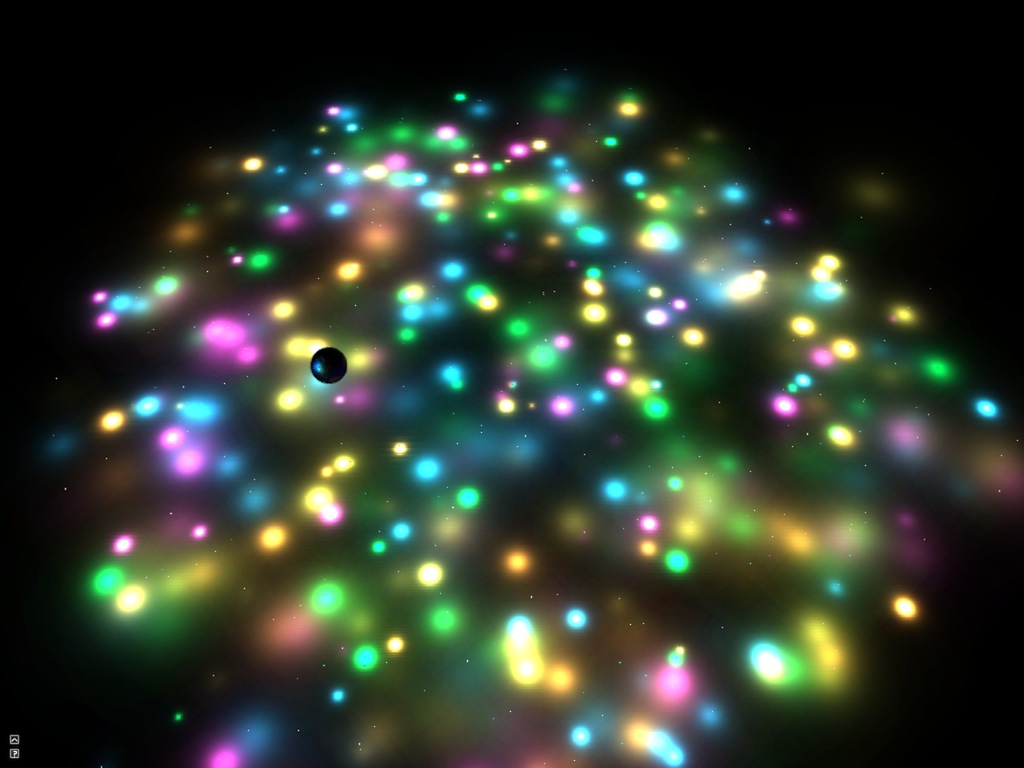
Cinder Deferred Renderer
Cinder application for deferred rendering experiments (lighing, shadow mapping, SSAO), available on Github at https://github.com/arisona/cinder_deferred_renderer
Forked from original code by Anthony Scavarelli at https://github.com/PlumCantaloupe/Cinder-Deferred-Renderer
Thanks to Anthony and the contributors this code is based on.
Original code ported to c++11 and optimized / fixed a couple of things, plus some new features/controls.
This code is based on a deferred renderer for point lights and screen space ambient occlusion (SSAO), including shadow mapping.
Digital Art Weeks at Siggraph Asia 2013
The Digital Art Weeks International will be guest at SIGGRAPH Asia this year in Hong Kong. Invited to be an exhibiting partner, the DAW has positioned itself with a ground breaking exhibition of Augmented Reality Art. The artworks can be seen through out Hong Kong on both sides of the channel.
New DJ Mix: Poursuite du Bonheur
Recorded live at Casa Arisona, Singapore, August 18 2013. Now available for your listening pleasure at Mixcloud:
LEA Special Issue on Live Visuals
Special issue on Live Visuals in Leonardo Electronic Almanac (LEA), edited by Özden Sahin, Lanfranco Aceti, Steve Gibson and Stefan Arisona. https://www.leoalmanac.org/vol19-no3-live-visuals/
Live Visuals, Leonardo Electronic Almanac LEA, Volume 19 Issue 3
Key advancements in real-time graphics and video processing over the past five years have resulted in broad implications for a number of academic, research and commercial communities. They enabled interaction designers, live visualists (VJs), game programmers, and information architects to utilize the power of advanced digital technologies to model, render and effect visual information in real-time.
Real-time visuals have a profoundly different quality and therefore distinct requirements from linear visual forms such as narrative film. The use of visual elements in a live or non-linear context requires a consideration of insights and techniques from other “non-visual” practices such as music performance or human-computer interaction. The issue is organised under the general rubric of knowledge-sharing between disparate research bodies and disciplines. This allows for distinct and dispersed groups to come together in order to exchange information and techniques. A key concern is to bring a humanistic approach by considering the wider cultural context of these new developments.
The special issue explores the future of the moving image, simultaneously acknowledging and extending on recent artistic trends and technological developments.
The issue is co-edited by Özden Sahin,Lanfranco Aceti, Steve Gibson, Stefan Arisona.
Table of Contents
When Moving Images Become Alive! Introduction by Lanfranco Aceti
Revisiting Cinema: Exploring The Exhibitive Merits Of Cinema From Nickelodeon Theatre To Immersive Arenas Of Tomorrow by Brian Herczog
The Future Of Cinema: Finding New Meaning Through Live Interaction by Dominic Smith
A Flexible Approach For Synchronizing Video With Live Music by Don Ritter
Avatar Actors by Elif Ayiter
Multi-Projection Films, Almost-Cinemas And Vj Remixes: Spatial Arrangements Of Moving Image Presence by Gabriel Menotti
Machines Of The Audiovisual: The Development Of “Synthetic Audiovisual Interfaces” In The Avant-Garde Art Since The 1970s by Jihoon Kim
New Photography: A Perverse Confusion Between The Live And The Real by Kirk Woolford
Text-Mode And The Live Petscii Animations Of Raquel Meyers: Finding New Meaning Through Live Interaction by Leonard J. Paul
Outsourcing The VJ: Collaborative Visuals Using The Audience’s Smartphones by Tyler Freeman
AVVX: A Vector Graphics Tool For Audiovisual Performances by Nuno N. Correia
Architectural Projections: Changing The Perception Of Architecture With Light by Lukas Treyer, Stefan Arisona & Gerhard Schmitt
In Darwin’s Garden: Temporality and Sense of Place by Vince Dziekan, Chris Meigh-Andrews, Rowan Blaik & Alan Summers
Back To The Cross-Modal Object: A Look Back At Early Audiovisual Performance Through The Lens Of Objecthood by Atau Tanaka
Structured Spontaneity: Responsive Art Meets Classical Music In A Collaborative Performance Of Antonio Vivaldi’s Four Seasons by Yana (Ioanna) Sakellion & Yan Da
Interactive Animation Techniques In The Generation And Documentation Of Systems Art by Paul Goodfellow
Simulating Synesthesia In Spatially-Based Real-Time Audio-Visual Performance by Steve Gibson
A ‘Real Time Image Conductor’ Or A Kind Of Cinema?: Towards Live Visual Effects by Peter Richardson
Live Audio-Visual Art + First Nations Culture by Jackson 2bears
Of Minimal Materialities And Maximal Amplitudes: A Provisional Manual Of Stroboscopic Noise Performance by Jamie Allen
Visualization Technologies For Music, Dance, and Staging In Operas by Guerino Mazzola, David Walsh, Lauren Butler, Aleksey Polukeyev
How An Audio-Visual Instrument Can Foster The Sonic Experience by Adriana Sa
Gathering Audience Feedback On An Audiovisual Performance by Léon McCarthy
Choreotopology: Complex Space In Choreography With Real-Time Video by Kate Sicchio
Cinematics and Narratives: Movie Authoring & Design Focused Interaction by Mark Chavez & Yun-Ke Chang
Improvising Synesthesia: Comprovisation Of Generative Graphics And Music by Joshua B. Mailman
Title: Live Visuals
Editor: Özden Sahin
Volume Editors: Lanfranco Aceti, Steve Gibson, Stefan Arisona
Journal: Leonardo Electronic Almanac
Publisher: MIT Press
Year: 2013
Volume: 19(3)
Pages: 384
ISBN: 978-1-906897-22-2
ISSN: 1071-4391
Link: https://www.leoalmanac.org/vol19-no3-live-visuals/