Tag: Digital Art
32 posts tagged with "Digital Art"
EPI Redux at EPFL's Rolex Center
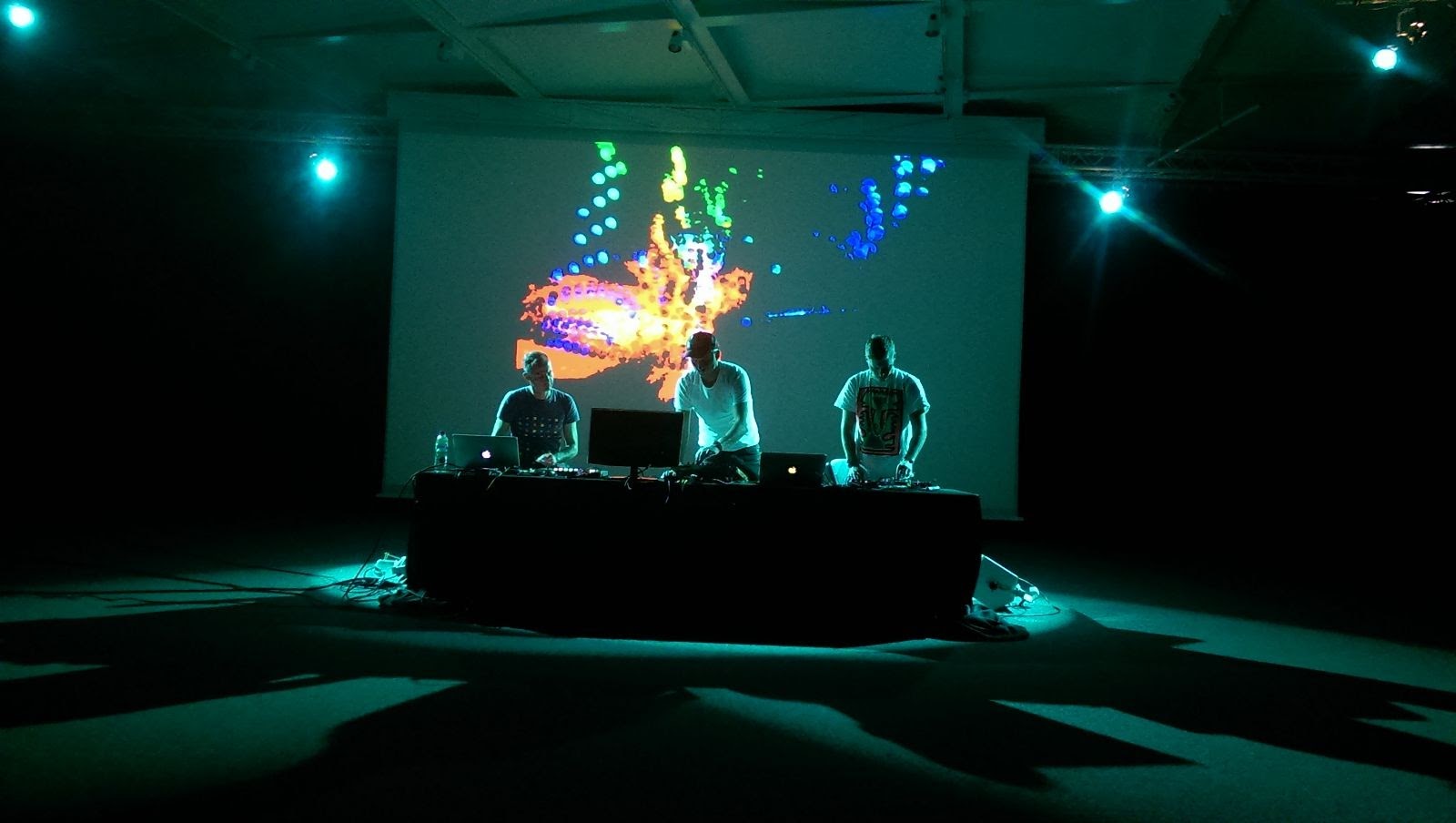
Another edition of the Exploding Plastic Inevitable Redux, this time at the beautiful Rolex Learning Center at EPFL in Lausanne Switzerland. Together with Marcel Andreas Reimer and Simon Schubiger, on October 20 2017.
Lego Ableton Push Stand
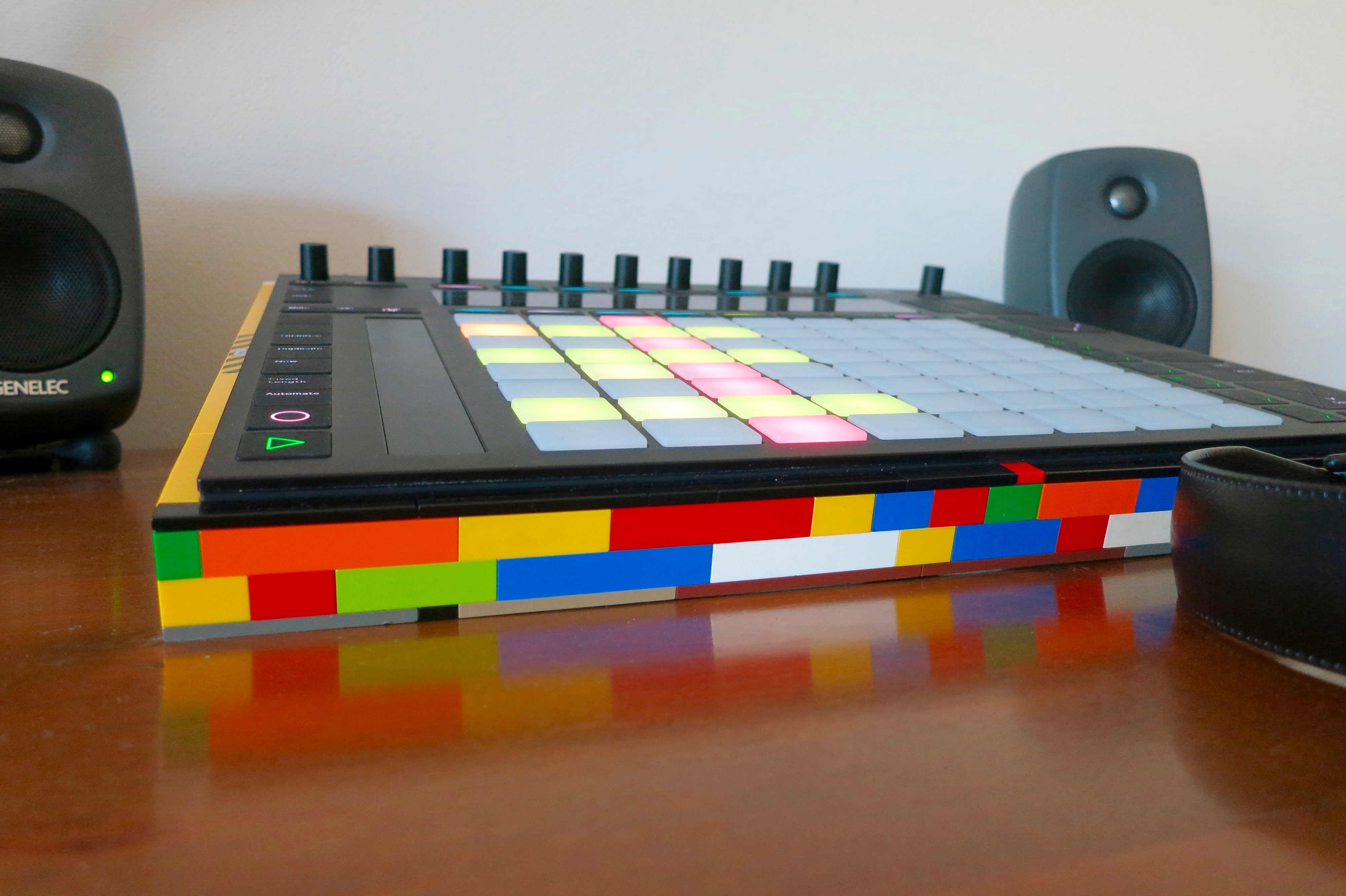
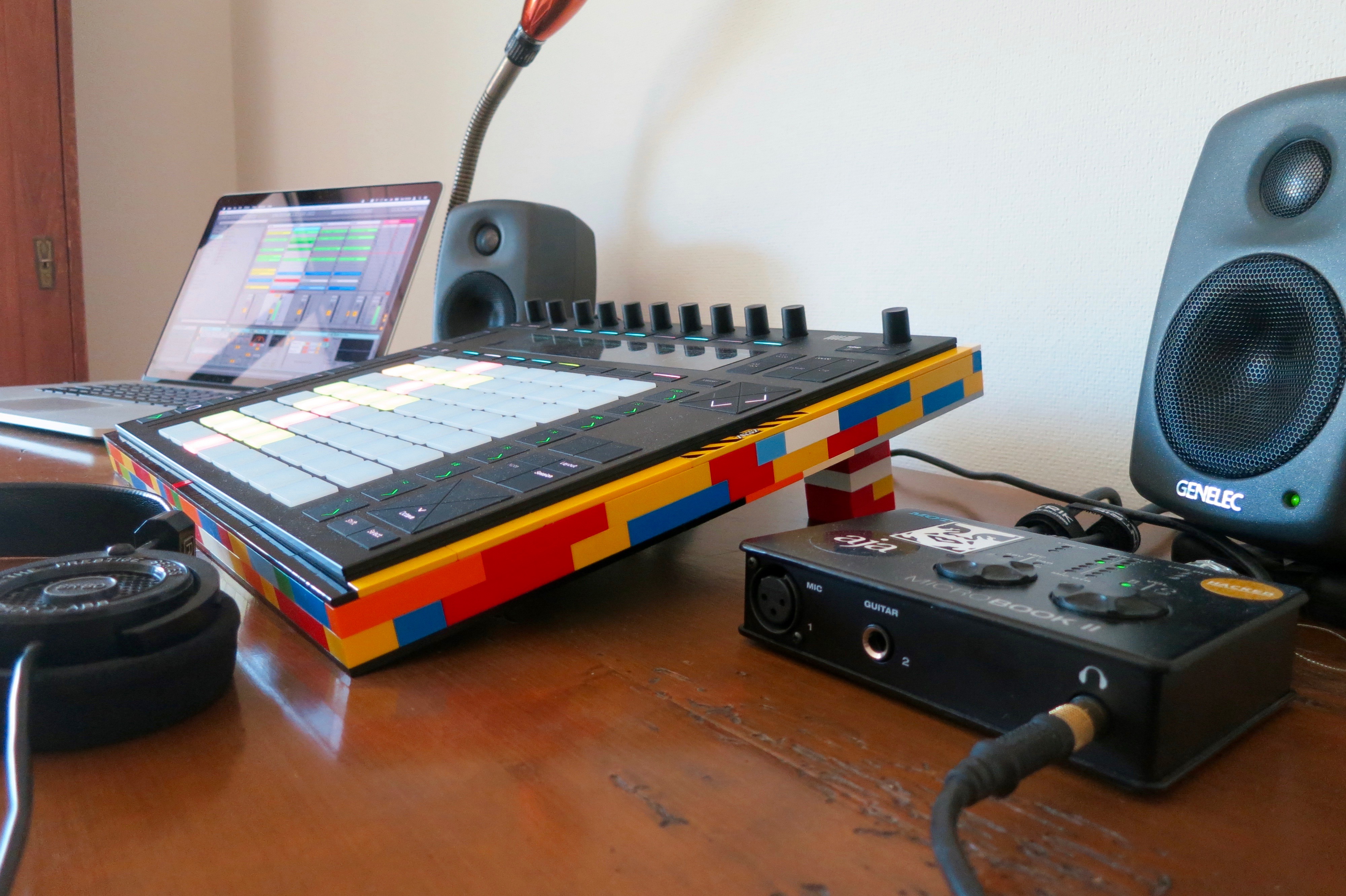
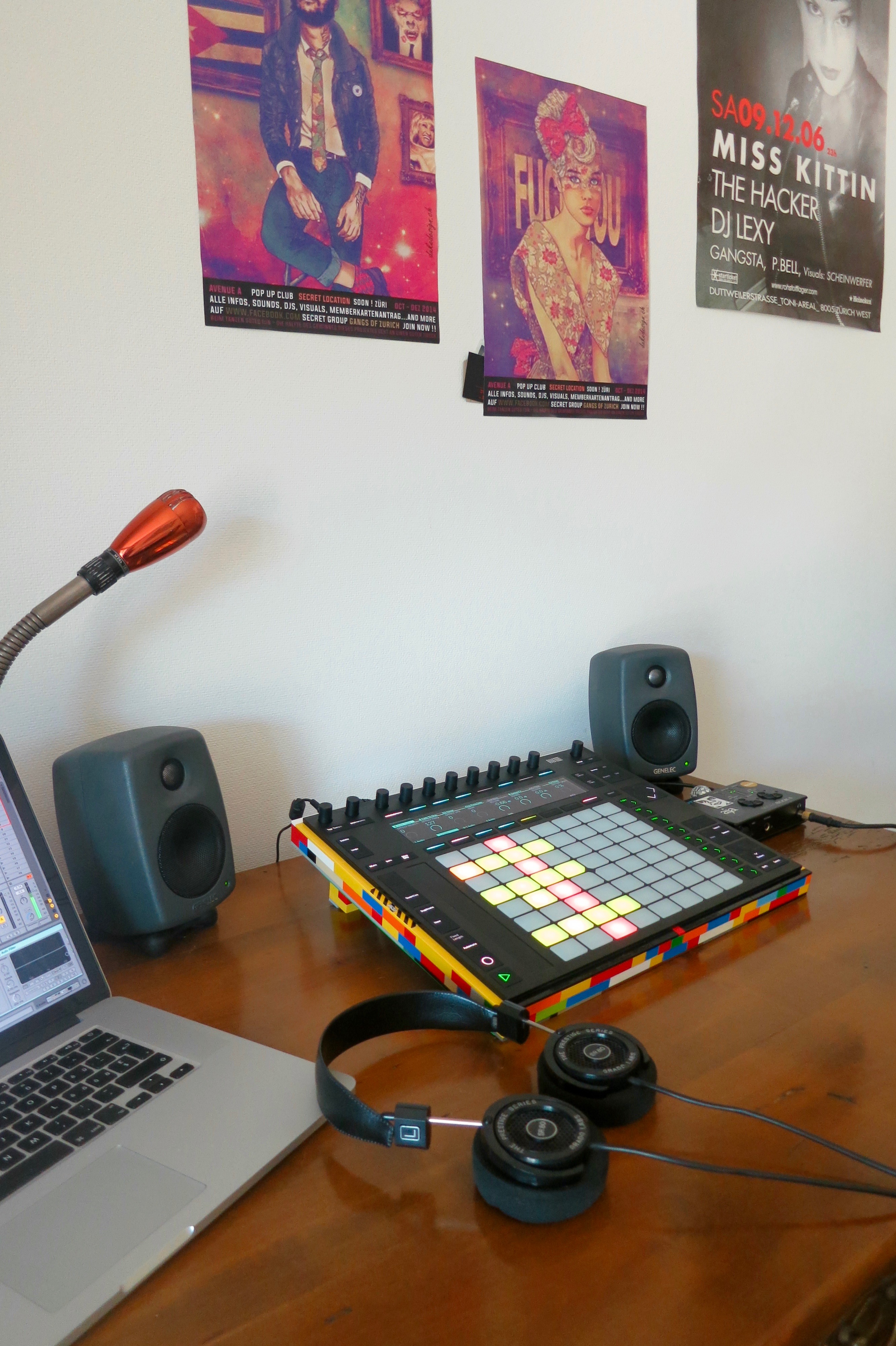
Here’s a little fun my son Romeo and I had during school holidays: A Lego stand for Ableton push. Inspired by the awesome Lego DJ Booth recently posted here. Our brick collection’s a bit more limited tough.
Amazingly, the Push perfectly fits into the Lego raster. Coincidence, Ableton engineers / designers?
Next step, make it height adjustable, etc. - and - use it!
Enabling DEMO:POLIS
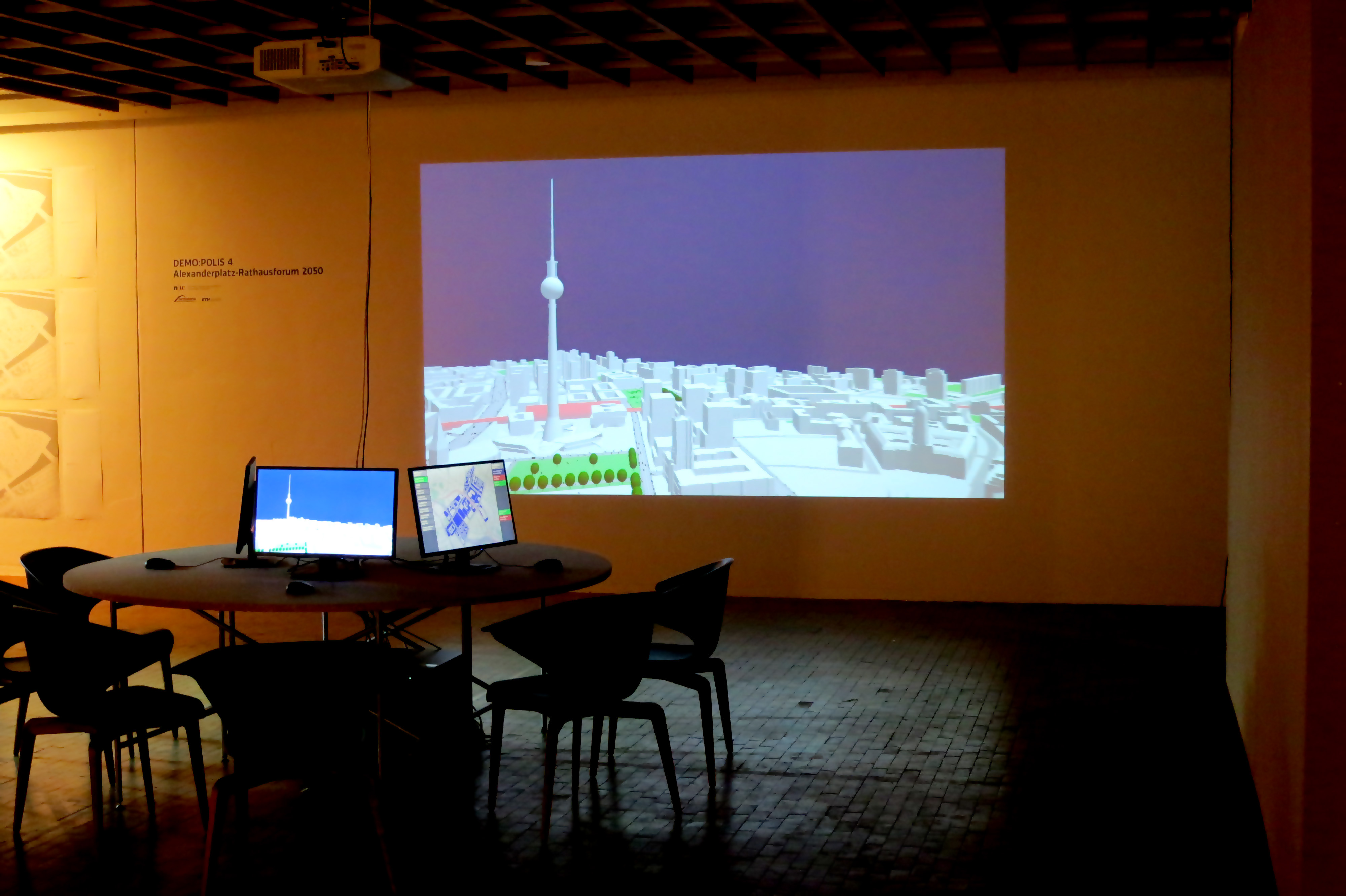
“Enabling DEMO:POLIS” is a participatory urban planning installation, presented as part of the DEMO:POLIS exhibition at the Berlin Akademie der Künste (https://www.adk.de/demopolis - 11.3.2016 - 29.5.2016). The installation engages the public in the design of open space and consists of six terminals that run a custom, interactive software application.
The software leads the user through a number of typical urban design tools (space allocation, streets, buildings, landscape, etc.) and concludes with a fly-through through the generated 3D scenario, in this case, the Rathausforum / Alexanderplatz area in Berlin.
The following video demonstrates a full cycle of a possible design.
Open Source
Source code, data and a binary build are available at: https://github.com/arisona
Credits
Concept: Stefan Arisona, Ruth Conroy Dalton, Christoph Hölscher, Wilfried Wang
Data & Coding: Stefan Arisona, Simon Schubiger, Zeng Wei
Support: Akademie der Künste Berlin, FHNW Switzerland (Institute of 4D Technologies), ETH Zürich (Future Cities Laboratory and Chair of Cognitive Science), Northumbria University (Architecture and Built Environment).
Data & Software Workflow
Enabling DEMO:POLIS builds on Open Data, in particular the publicly available 3D models of central Berlin provided by the Staatssenat für Stadtentwicklung und Umwelt (https://www.stadtentwicklung.berlin.de/planen/stadtmodelle/))
The original 3D models were initially imported into Autodesk AutoCAD for layer selection and coordinate system adjustments, then imported into Autodesk Maya for data cleaning and corrections. In a final step the data was imported into Esri CityEngine for final data adjustments & cleaning, merging, labelling, etc. The data was then exported as OBJs. The software application is written in Java, based on the 3D graphics library/engine ether. As indicated above, all source code and data is available as open source.
The Wild Jewels
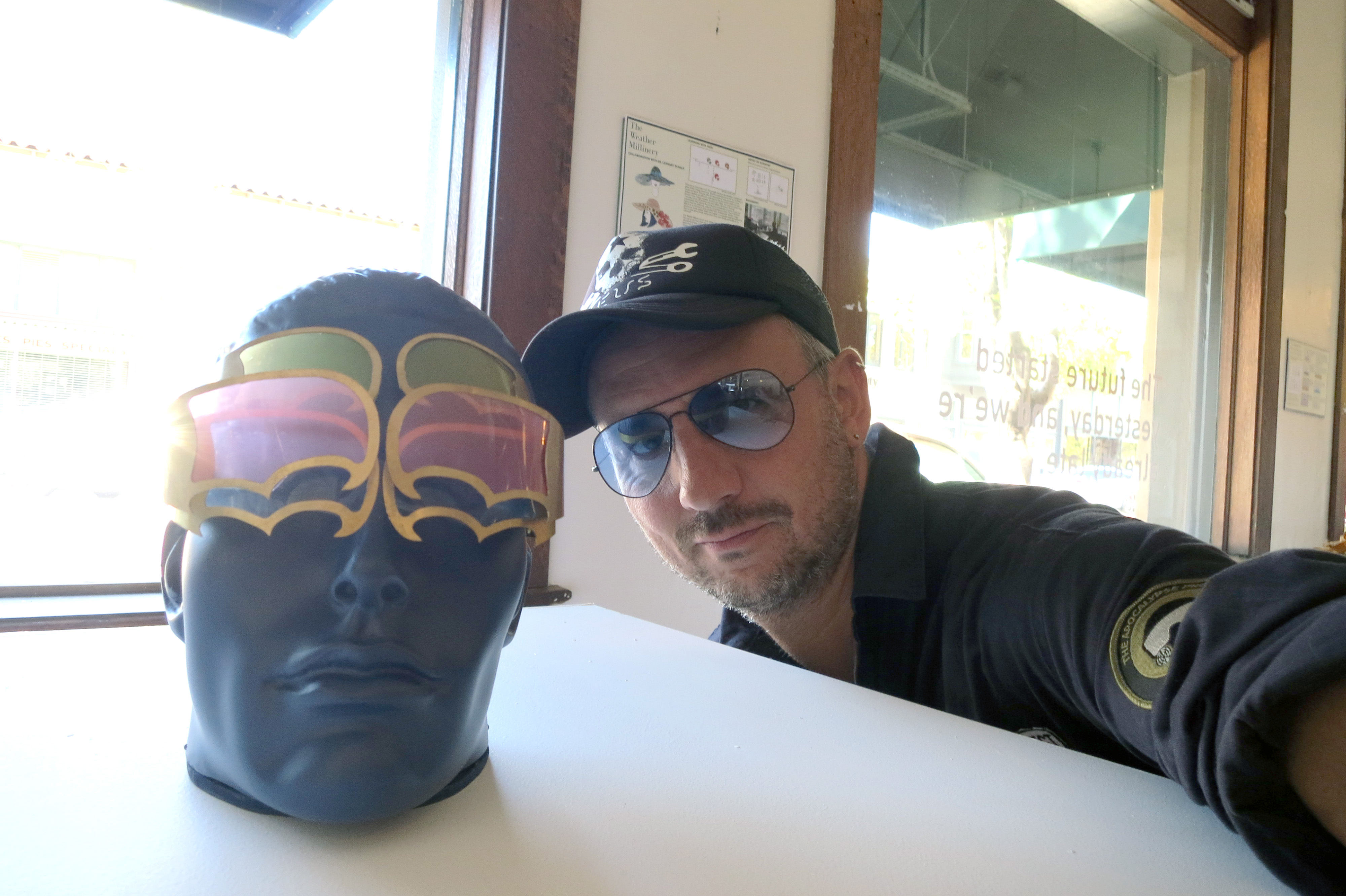
Exhibition at the Institute for the Future (IFTF), Palo Alto, 21 September 2015 - 15 April 2016 as part of the Apocalypse Exhibition by Catherine Young
Pre-opening at swissnex San Francisco, 19 September 2015
Stefan Arisona, Simon Schubiger, in collaboration with Catherine Young
The Wild Jewels explore the possibilities of data-driven wearable technology that responds to future environmental scenarios. The pieces make use of data provided by millions of sensors and mobile phones that permanently collect data of the momentary state of a city; and in addition expand the scale to include solar activity data collected from observatories and probes in space.
The collection is inspired by large data analysis and collaboration facilities such as the Value Lab Asia, and it demonstrates typical modes of interaction with data: visualizing, filtering, projecting and connecting in a different context. Thereby, the pieces freely re-interpret and embody these modes, and bring them to a small, personal scale. The functional aspect is combined with precious materials and traditional jewelry and accessory designs, ultimately to be worn as pretty artworks.
Raumwetter (Space Weather Orb)
Raumwetter is a necklace that visualizes the beauty of space weather: The sun permanently releases streams of hot gas into space – the solar wind. A solar flare may blast millions of tons of matter into space, turning the wind into a storm reaching speeds of up to 2 million miles per hour. Luckily, on earth we are protected. Earth’s magnetic field redirects most charged solar particles to flow around the planet. However, space based technology (GPS), communication systems and power grids may be at risk. Thus, Raumwetter also has the capability to warn you of intense solar events.
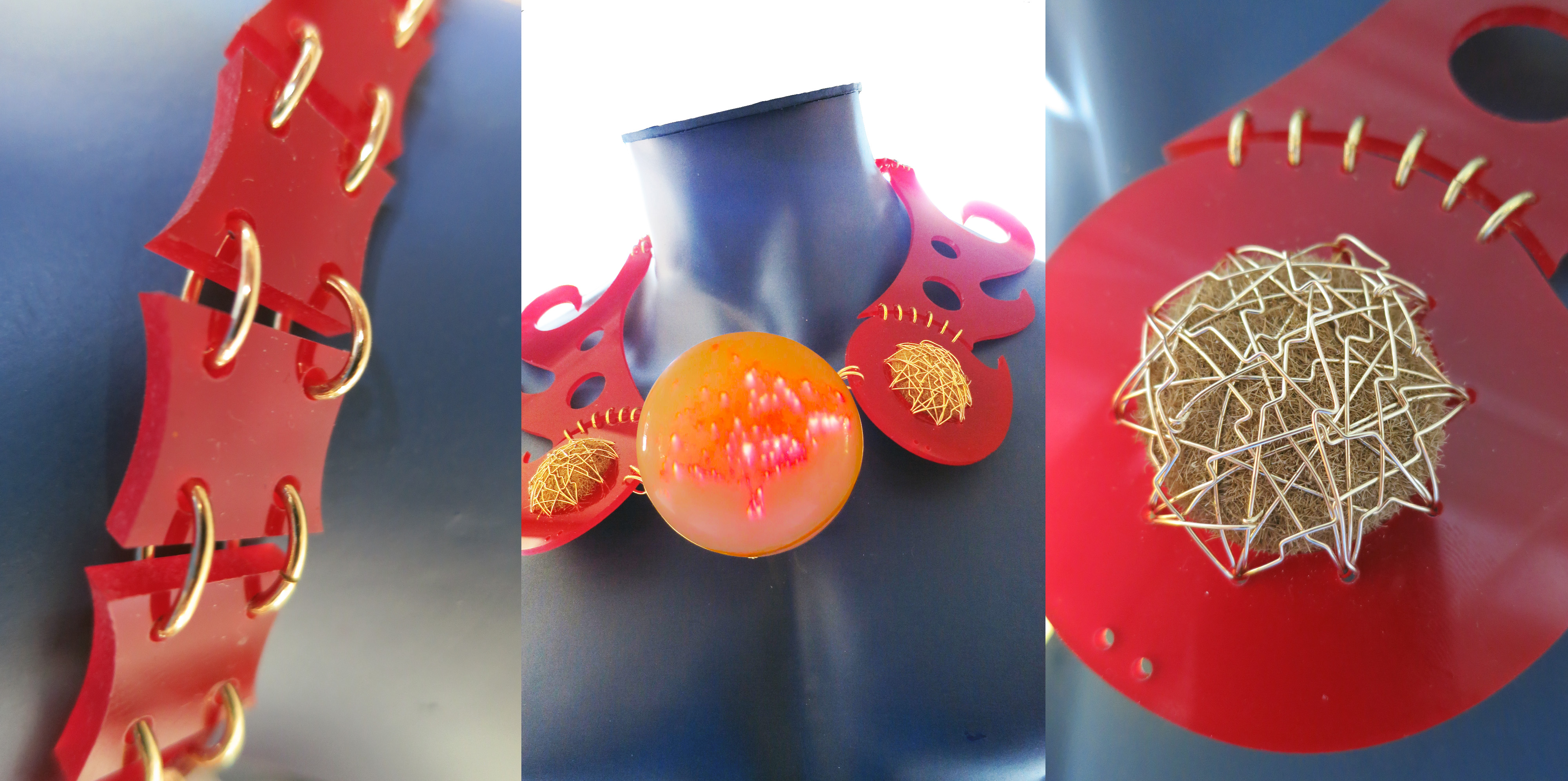 Raumwetter: Machine-cut acrylic; “patate di mare”; gold wire; transparent acrylic sphere, lit with pico-projector from inside.
Giftschleuse (Poison Gate Cuff)
On Earth, 780 million people do not have access to clean water, and in the near future, availability of water is expected to decrease in many regions. Giftschleuse is a water filtering bangle that can be worn at all times. It provides instant, clean water. Similarly to an exo-skeleton, it is an exo-organ that provides additional functions to the human body in situations where our own organism cannot deal with conditions such as polluted water. In addition, it maps areas of clean water and shares the data with other water-seekers nearby.
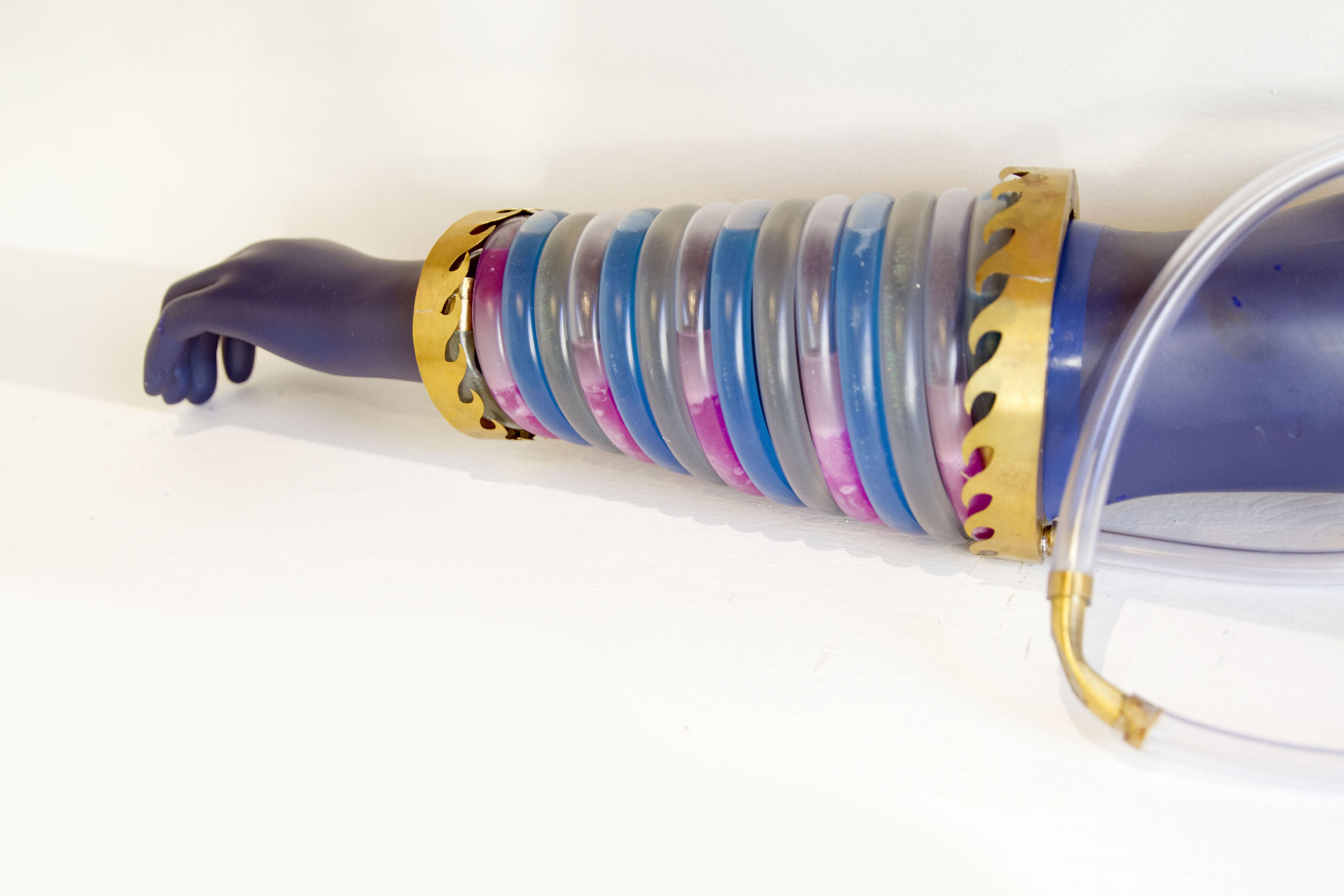 Giftschleuse: Machine cut brass, silicon pipes, coloured cooling liquid, electrical pumps.
Durchblick (Clear Vision Goggles)
Besides correcting your seeing capabilities and protecting your eyes from strong light, Durchblick is a multifunctional display device that allows you to project the invisible into your visual perception: Depending on its configuration, it provides hints about wireless communication networks, radiation, dust and more. These are the shades for a hotter planet!
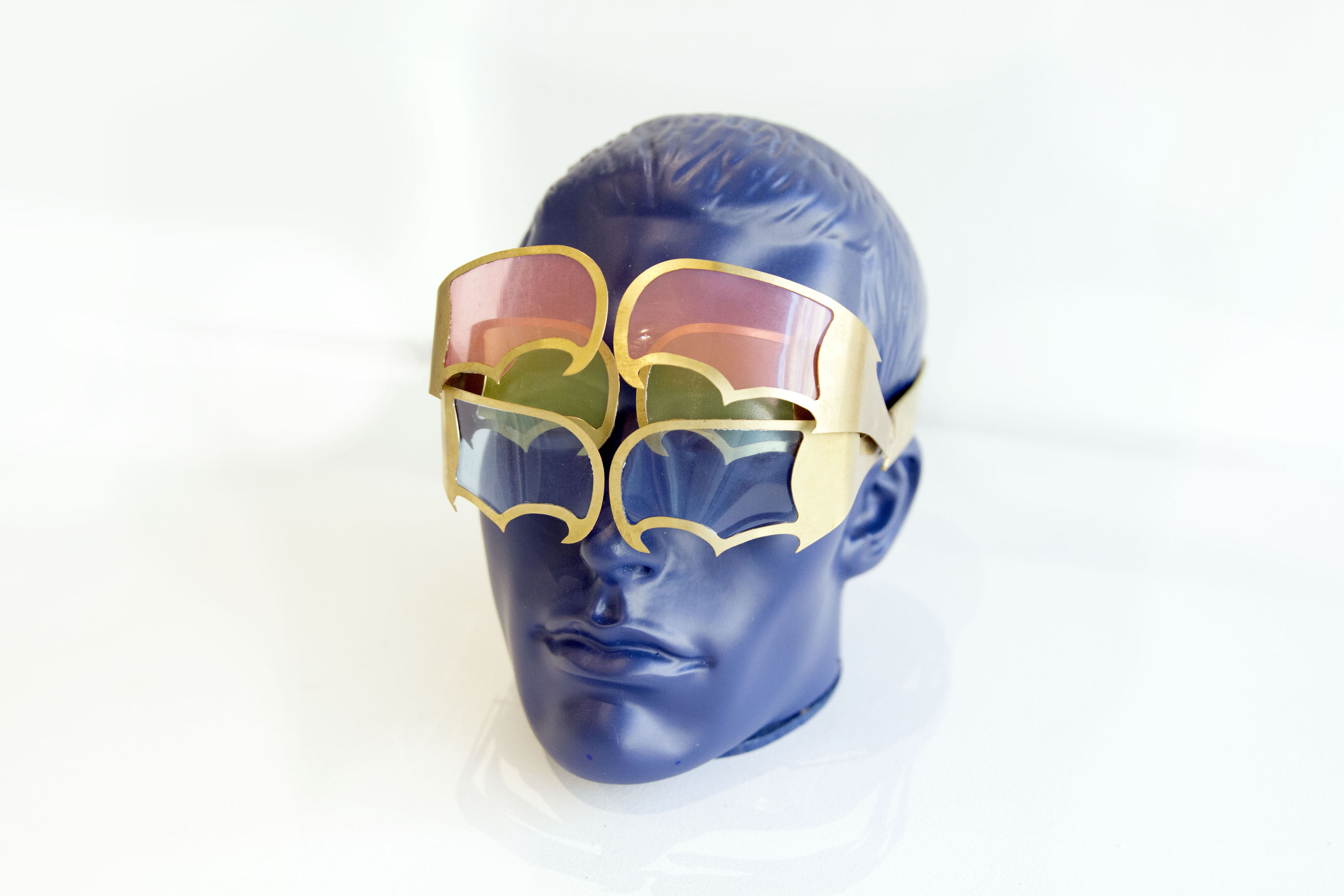 Durchblick: Machine-cut brass, acrylic glasses, motorised clock-work driving the shades.
Übergesund (Super Health Glove)
Übergesund is decorated glove and a social health device that builds spontaneous data networks with other wearers. It will inform you if somebody near you needs help, and it forwards such alerts to others around who might be able to help. In densely populated areas, such as in cities, Übergesund provides a decentralized health-network that allows for community-sourced services that are available at a high response time.
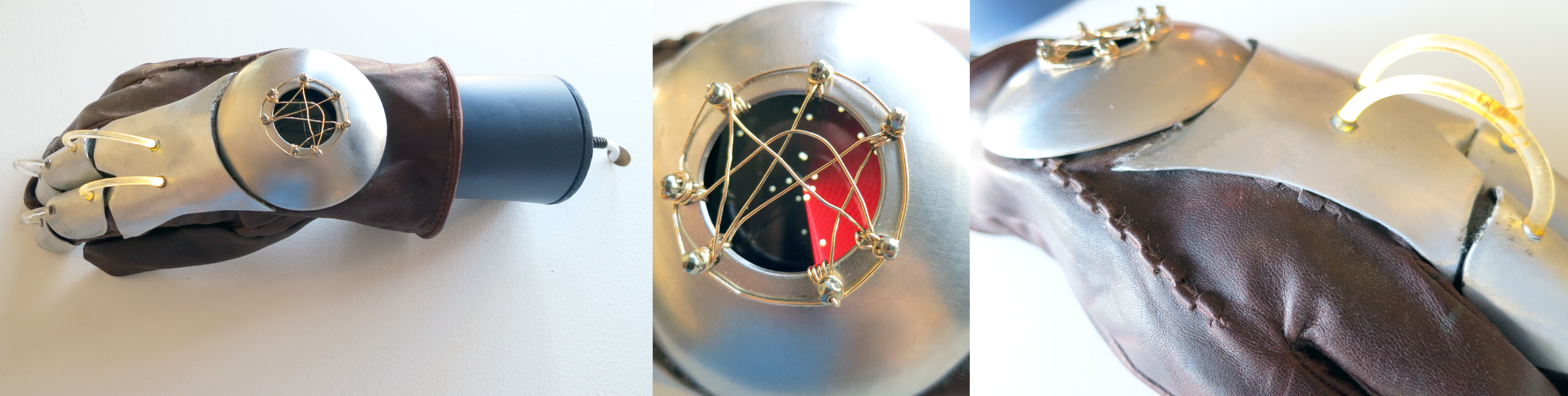 Übergesund: Cut, turned and brushed steel; gold wire; silicon LED strings; custom-programmed smart watch LCD display.
This work was supported by: ETH Zürich (ETH Global & Future Cities Laboratory), FHNW (Institute of 4D Technologies), Institute for the Future, swissnex San Francisco, Consulate General of Switzerland in San Francisco.

More infos on the Apocalypse Project: https://apocalypse.cc

Journal of Professional Communication: "Art/Science Hybrids"
Special Issue on Art/Science Hybrids. Journal of Professional Communication (JPC), Volume 3, Issue 2, 2013
https://digitalcommons.mcmaster.ca/jpc/
A collection of papers originally presented at Digital Art Weeks 2013 Singapore (DAW), https://www.digitalartweeks.ethz.ch/
Editor in chief: Alex Sévigny, McMaster University
Guest editors: Steve Gibson, Faculty of Art, Design and Social Science, Northumbria University, Newcastle, UK and Stefan Arisona, University of Applied Sciences and Arts Northwestern Switzerland FHNW / Future Cities Laboratory, ETH Zurich
The rise of new transdisciplinary practices in the late 20th and early 21st Centuries is striking. The gulf between art and science that has widened since the Enlightenment has now been challenged by a wide body of scholars, artists, designers and scientists. This special issue explores the concerns of emergent transdisciplinary research that seeks to re-unite the arts and sciences.
Table of Contents
Editorials
Preface to the JPC special issue on Art/Science Hybrids. Alex Sévigny
Art Into science/science into art. Steve Gibson
Iterative Emergence of Art/Science Hybrids. Stefan Arisona, Pascal Mueller, Simon Schubiger, and Matthias Specht
Commentary
Augmenting science through art. Matthias Berger
Next nature: ‘nature caused by people’. Sue Thomas
Interview
Interview with George Legrady, chair of the media arts & technology program at the University of California, Santa Barbara. Stefan Arisona
Research Articles
Art-science and verbal articulation in hyper-visual techno-culture. F. Scott Taylor
Theoretical aesthetics. Adam Tindale
Mapping art to systems thinking. Paul Goodfellow
The superhero and the DJ: Science meets design. Mikael Lindstrom, Farvash Razavi, and Nandi Novell
Social commentary through the transdisciplinary practice of audio-visual performance. Léon McCarthy
The digitization of music and the accessibility of the artist. Marius Carboni
Live programming for robotic fabrication. Jason Lim
Title: Art/Science Hybrids
Editor: Alex Sévigny
Guest Editors: Steve Gibson and Stefan Arisona
Journal: Journal of Profession Communication
Year: 2013
Volume: 3(2)
Link: https://digitalcommons.mcmaster.ca/jpc/