
Tag: Research
40 posts tagged with "Research"
CityEngine - 3D City Modeling for Architecture, Film, and Games
ArcGIS CityEngine, is a 3D modeling software application developed by Esri R&D Center Zurich (formerly Procedural Inc.) and is specialized in the generation of three dimensional urban environments. With the procedural modeling approach, CityEngine enables the efficient creation of detailed large-scale 3D city models with merely a few clicks of the mouse instead of the time exhaustive & work intensive method of object creation & manual placement. CityEngine works with architectural object placement & arrangement in the same manner that VUE manages terrain, ecosystems & atmosphere mapping & is equally as diverse in its ability of object manipulation & environmantal conformity/harmony as its VUE counterpart. The recent acquisition of CityEngine by Esri is aiming to push the innovations in 3D GIS and Geodesign technology (from Wikipedia).
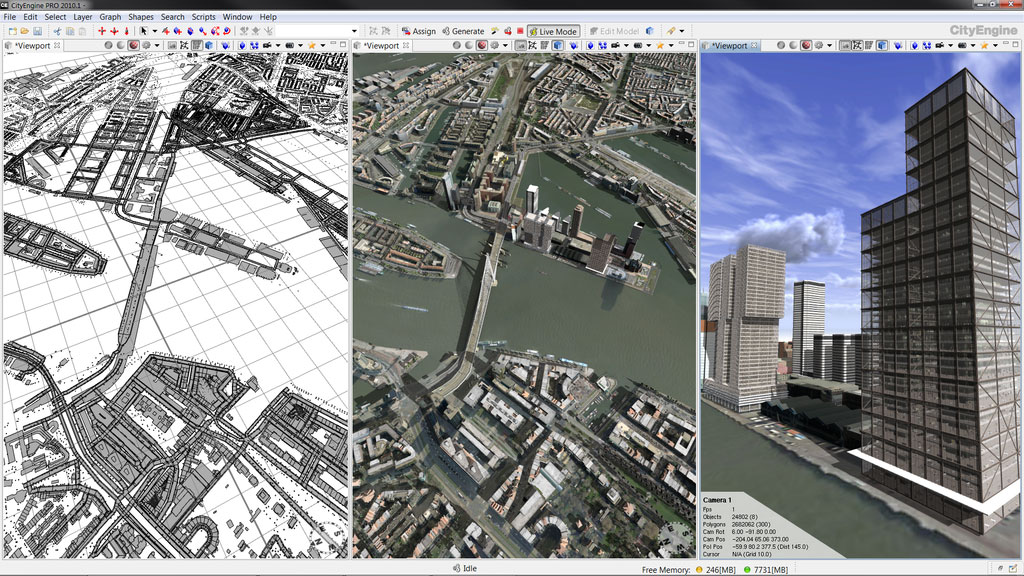
In 2008 I joined the ETH Zurich spin-off company Procedural Inc. as a software architect, and worked the general CityEngine software design, the real-time rendering core, and interactive 3D editing features.
CityEngine was quickly adopted by big players in different industry areas where fast 3D digital content creation is needed. Some examples are:
- Film: DreamWorks, Pixar, Weta Digital, Mr. X Inc., Fold7.
- Gaming: Blizzard Entertainment, Rockstar Games, Square Enix, THQ, Grasshopper Manufacture.
- Architecture and Urban Planning: Foster+Partners, Zaha Hadid Architects, SOM, Coop Himmelb(l)au.
- Government: Singapore Urban Redevelopment Authority, Brisbane City.
- Education: MIT, Stanford University, Harvard, Carnegie Mellon, ETH Zurich, Fraunhofer Gesellschaft.
- Others: Microsoft, IBM, Nvidia, Samsung.
More information: https://www.esri.com/software/cityengine
Company: Procedural Inc.
Position: Software Architect
Period: 2008 - 2011
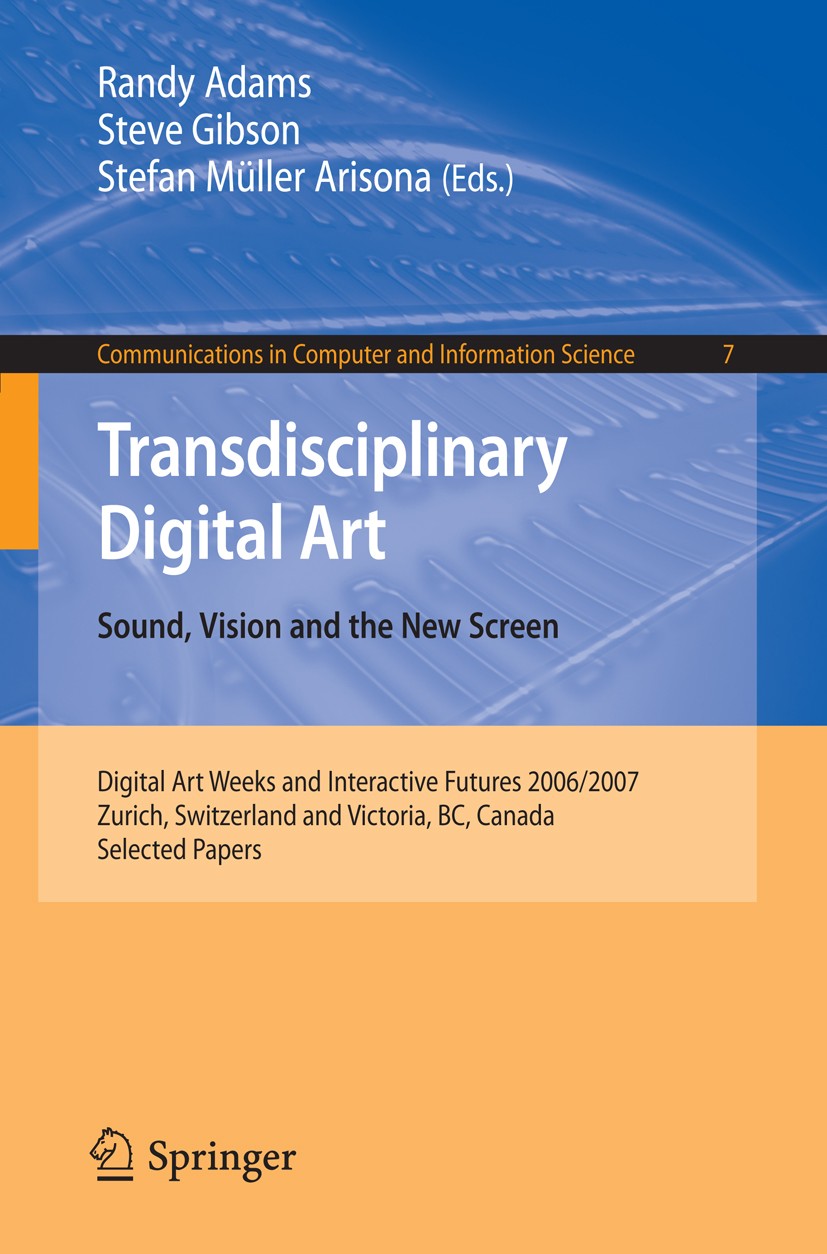
Book: Transdisciplinary Digital Art - Sound, Vision and the New Screen
Edited by Randy Adams, Steve Gibson, Stefan Arisona, 2008
This volume collects selected papers from the past two instances of Digital Art Weeks (Zurich, Switzerland) and Interactive Futures (Victoria, BC, Canada), two parallel festivals of digital media art. The work represented in Transdisciplinary Digital Art is a confirmation of the vitality and breadth of the digital arts. Collecting essays that broadly encompass the digital arts, Transdisciplinary Digital Art gives a clear overview of the on-going strength of scientific, philosophical, aesthetic and artistic research that makes digital art perhaps the defining medium of the 21st Century.
Contents
- Introduction: Why Tansdisciplinary Digital Art? - Steve Gibson
I Philosophies of the Digital
The Ethics of Aesthetics - Don Ritter
Ethical and Activist Considerations of the Technological Artwork - David Cecchetto
DIY: The Militant Embrace of Technology - Marcin Ramocki
Tuning in Rorschach Maps - Will Pappenheimer
Body Degree Zero: Anatomy of an Interactive Performance - Alan Dunning, Paul Woodrow
Artificial, Natural, Historical - Acoustic Ambiguities in Documentary Film - Julian Rohrhuber
The Colour of Time (God is a lobster and other forbidden bodies) - Johnny Golding
Behind the Screen: Installations from the Interactive Future - Ted Hiebert
II Digital Literacies
Transliteracy and New Media - Sue Thomas
Digital Archiving and “The New Screen” - John F. Barber
Digital Fiction: From the Page to the Screen - Kate Pullinger
The Present [Future] of Electronic Literature - Dene Grigar
Transient Passages: The Work of Peter Horvath - Celina Jeffery
III Multimedia Composition and Performance
Visceral Mobile Music Systems - Atau Tanaka
Designing a System for Supporting the Process of Making a Video Sequence - Shigeki Amitani, Ernest Edmonds
Video Game Audio Prototyping with Half-Life 2 - Leonard J. Paul
Computer-assisted Content Editing Techniques for Live Multimedia Performance - Stefan Arisona, Pascal Müller, Simon Schubiger-Banz, Matthias Specht
Computational Audiovisual Composition Using Lua - Wesley Smith, Graham Wakefield
Interrelation: Sound-Transformation and Re-Mixing in Real-Time - Hannes Raffaseder, Martin Parker
Functors for Music: The Rubato Composer System - Guerino Mazzola, Gerard Milmeister, Karim Morsy, Florian Thalmann
Inventing Malleable Scores: From Paper to Screen Based Scores - Arthur Clay
Glimmer: Creating New Connections - Jason Freeman
Variations on Variations - Daniel Peter Biro
IV Interfaces and Expression
Gestures, Interfaces and Other Secrets of the Stage - Eva Sjuve
Beyond the Threshold: The Dynamic Interface as Permeable Technology - Carolyn Guertin
CoPuppet: Collaborative Interaction in Virtual Puppetry - Paolo Bottoni, Stefano Faralli, Anna Labella, Alessio Malizia, Mario Pierro, Semi Ryu
Experiments in Digital Puppetry: Video Hybrids in Apples Quartz Composer - Ian Grant
Formalized and Non-Formalized Expression in Musical Interfaces - Cornelius Poepel
V Digital Space: Design, Movement, and Robotics
Interactive Spaces - Jeffrey Huang, Muriel Waldvogel
From Electric Devices to Electronic Behaviour - Stijn Ossevoort
Scentsory Design: Scent Whisper and Fashion Fluidics - Jennifer Tillotson
Advances in Expressive Animation in the Interactive Performance of a Butoh Dance - Jürg Gutknecht, Irena Kulka, Paul Lucowicz, Tom Stricker
Anthropocentrism and the Staging of Robots - Louis-Philippe Demers, Jana Horakova
VI Digital Performance in Urban Spaces
Imaging Place: Globalization and Immersive Media - John Craig Freeman
About… Software, Surveillance, Scariness, Subjectivity (and SVEN) - Amy Alexander
The NOVA Display System - Simon Schubiger-Banz, Martina Eberle
Four Wheel Drift - Petra Watson, Julie Andreyev
Publication Information
Collection: Digital Art Weeks and Interactive Futures 2006/2007, Zürich, Switzerland and Victoria, BC, Canada, Selected Papers
Publisher: Springer, Berlin Heidelberg
Series: Communications in Computer and Information Science , Vol. 7
Editors: Adams, Randy; Gibson, Steve; Arisona, Stefan (Eds.)
Year: 2008
ISBN: 978-3-540-79485-1
Link: https://www.springerlink.com/content/978-3-540-79485-1
ETH Zurich's Digital Art Weeks
I am co-founder and scientific director of ETH Zurich’s Digital Art Weeks. The Digital Art Weeks, an annually recurring festival, are concerned with the application of digital technology in the arts. Consisting of a symposium, workshops and performances, the program offers insight into current research and innovations in art and technology as well as illustrating resulting synergies in a series of performances, making artists aware of impulses in technology and scientists aware of the possibilities of the application of technology in the arts. In 2008 and 2010, a very successful version of Digital Art Weeks took place in Shanghai and Xi’an, China, and currently DAW'13 (early 2013) in Singapore is preparation…
https://www.digitalartweeks.ethz.ch/
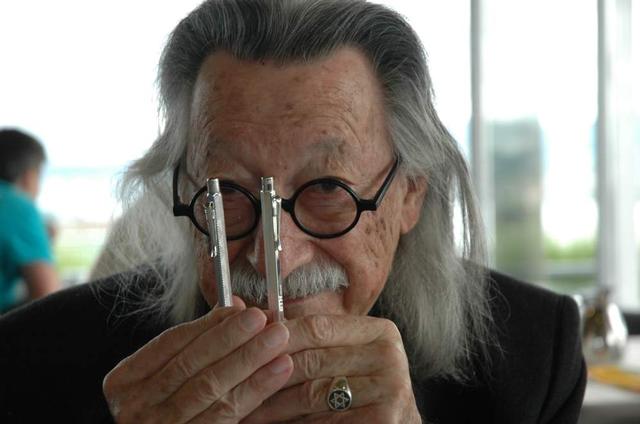
One of my personal highlights of the series of past Digital Art Weeks was the special opening day and the keynote of Joseph Weizenbaum (1923-2008) in 2007, as I have always admired his ambivalent position towards computer and information technology. At DAW07, we also screened the documentary ‘Weizenbaum. Rebel at Work.’ by Peter Haas and Silvia Holzinger.
https://www.youtube.com/watch?v=5_LCLjqCTXs
Festival History
- 2013 - Singapore
- 2011 - Victoria, BC, Canada
- 2010 - Xi’an, China
- 2008 - Shanghai, China
- 2007 - Zurich, Switzerland
- 2006 - Zurich, Switzerland
- 2005 - Zurich, Switzerland
Procedural City - Biometric Cities at Your Fingerprints
Permanent Exhibition Ars Electronica Center, 2009 - 2012
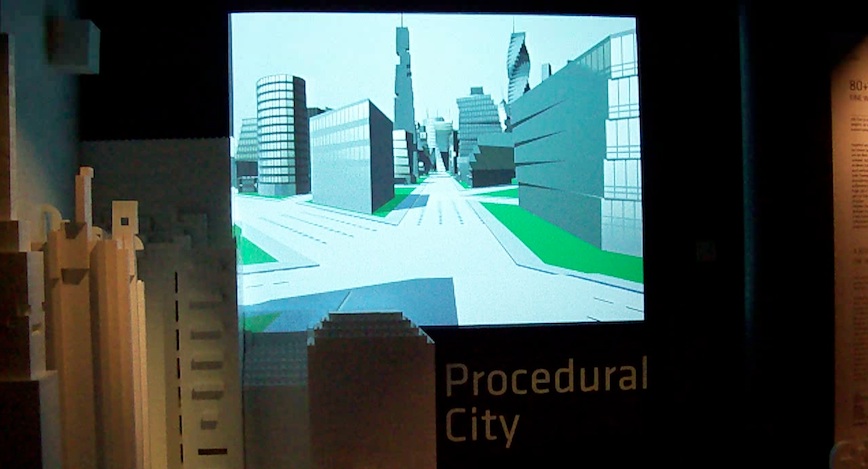
Procedural City is an interactive media installation which has incorporated the generative modeling features of CityEngine along with a biometric fingerprint scanner. It enables the user to create his/her own personal city according to their fingerprint.
To interact with this installation the user scans his fingertip and subsequently the data is imported into CityEngine for processing. The fingerprint is analyzed to the point where CityEngine can generate street networks according to the pattern of the strongest lines. Once the streets are generated the buildings are ready to be modeled and this happens right in front of the users eyes. Finally a simple touch interface with navigation controls (actually an iPod) allows the user to explore the personalized city from all angles and perspectives.
The installation has been developed by Procedural Inc in collaboration with the Ars Electronica Futurelab, and is part of the GeoCity exhibition at the Ars Electronica Center (AEC) in Linz, Austria.
For more information on the foundation technology used, refer to the CityEngine page or to Esri’s CityEngine home page: https://www.esri.com/software/cityengine
https://www.youtube.com/watch?v=AMmsQ3KbQLI
Permanent Exhibition: Ars Electronica Center, Linz, Austria (16.6.2009 - 1.4.2012).
Additional exhibitions: Xi’an Academy of Fine Arts, Xi’an, China (July 02 – 16 2010). Maison D’Ailleurs, Yverdon-les-Bains, Switzerland (March 11 - December 09 2012), supported by the Game Culture Initiative of Pro Helvetia / Swiss Arts Council. Seoul National University Museum of Arts (October 10 - December 20 2014).
Concept, programming and realisation: Simon Schubiger and Stefan Arisona of Procedural Inc, AEC edition in collaboration with the AEC Futurelab.
Computer-assisted Media Authoring Techniques
Stefan Arisona, research fellowship at UCSB, 2007 - 2008
Project Summary
The volume of digital media content has enormously grown in the recent years: Emerging internet-based applications, such as YouTube or MySpace, are media-rich, emphasise on content sharing, and attract huge communities. As the volume of content further expands, we see an increasing need for not only being able to annotate and retrieve content, but also to produce and edit content in a computer-assisted manner and by employing (semi-) automated methods. However, existing work so far does not satisfy these needs – both in terms of usable software instruments as well the underlying theoretical frameworks. This viewpoint is also acknowledged by upcoming European Union IST projects: The Framework Programme 7 (FP7) calls for projects addressing Intelligent Content and Semantics and targets at advanced authoring environments for interactive and expressive content [ICT Programme Committee, 2007, Objective ICT-2007.4.2].
This project aims at a systematic classification and implementation of novel content authoring techniques. By “mixed-media content authoring” we understand the interactive editing, or the ‘‘composition’’, of content for multiple modalities (e.g., auditory and visual). The project emphasises on applying computational methods in order to enable a high degree of automatisation of the authoring process. It further aims at techniques that are concerned with expressive human-computer interaction and those that need to operate in real-time, where needed.
Central to the project is the hypothesis that existing traditional composition techniques from individual domains (e.g., music, graphics, video) can be identified, classified, and then be generalised in a foundational framework of interactive media composition techniques that is applicable to automated authoring tasks. We claim that the implementation of these techniques will lead to more effective methods for simultaneous mixed-media authoring. The project starts out by establishing a catalogue of media composition techniques. This includes collecting and classifying existing techniques from specific modalities, identifying common methodologies, and also filling gaps and building bridges with new techniques where needed. Before actually implementing the composition techniques, an appropriate real-time content rendering infrastructure is required. Here, the project benefits from preliminary work carried out at the former Multimedia Laboratory of the University of Zurich and at the Computer Systems Institute of ETH Zurich. As its central part, the project implements relevant composition techniques as part of an interactive media authoring instrument. Special thoughts are given to a human-centred approach in order to prevent results that are stigmatised by software, and in order to provide the highest possible degree of expressiveness to content authors. At its final stage, the project empirically verifies the results by means of concrete application scenarios from media art and entertainment.
The project brings together elements from many different fields, primarily from software engineering, human-computer interaction, and the foundations of multimedia, but also from music composition, film editing theory, and aesthetics. The intellectual merit of the project is to provide systematic foundational work on mixed-media composition techniques by exploiting computational methods and to validate the practicability of the theory in terms of usable software instruments. Besides of dissemination of scientific findings, the broader impacts of the project are expected to be very significant for a wide range of applications that depend on computer-assisted and automated content creation techniques: Among others, example beneficiaries are the entertainment industry or commercial content providers who can benefit from novel expressive authoring instruments, or emerging services beyond IPTV, where automated content composition tasks help supporting whole communities. Collectively, the project aims at advancing the state of the art of interactive media content authoring to a new level.

Project: Post-doctoral research fellowship, fully funded by the Swiss National Science Foundation (“Fellowship for Advanced Researchers”)
Location: Media Arts & Technology, University of California, Santa Barbara
Period: 2007 - 2008