
Tag: Teaching
6 posts tagged with "Teaching"
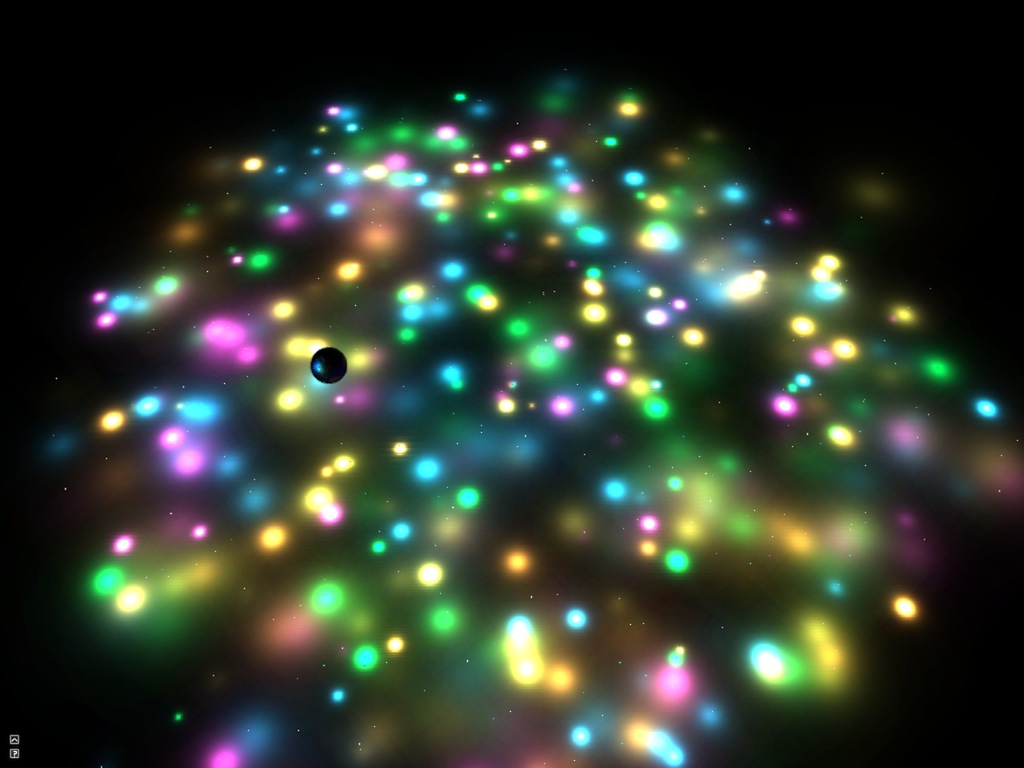
Cinder Deferred Renderer
Cinder application for deferred rendering experiments (lighing, shadow mapping, SSAO), available on Github at https://github.com/arisona/cinder_deferred_renderer
Forked from original code by Anthony Scavarelli at https://github.com/PlumCantaloupe/Cinder-Deferred-Renderer
Thanks to Anthony and the contributors this code is based on.
Original code ported to c++11 and optimized / fixed a couple of things, plus some new features/controls.
This code is based on a deferred renderer for point lights and screen space ambient occlusion (SSAO), including shadow mapping.
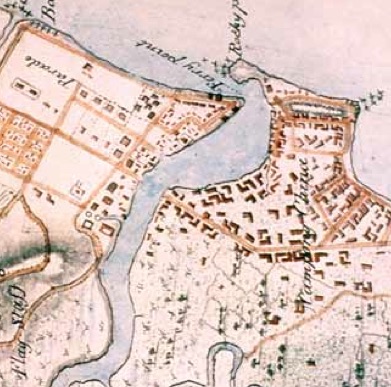
Summer School "Future Cities: Networks and Grammars" (24.6 - 12.7.2013)
From 24. June - 12. July, the Future Cities Laboratory will host the “Future Cities 2013” summer school on “Networks and Grammars”. As part of the programme, my colleagues and I will be teaching hands-on crash courses using Esri CityEngine.
More information: https://www.sustainability.ethz.ch/lehre/Sommerakademien/so2013/index_EN

Open Call: Art/Science Residency at the Future Cities Laboratory
ASR 2013 Call For Proposals
Please find full call and application forms here: https://www.digitalartweeks.ethz.ch/web/DAW13/ASR2013
Arts/Science Residency with focus on Transmedia at ETH Zurich’s Future Cities Laboratory
The Singapore-ETH Centre, in collaboration with the Arts and Creativity Lab & the Interactive and Digital Media Institute, are pleased to announce a 2013 Arts/Science Residency at ETH Zurich’s Future Cities Laboratory (FCL). The selected artist will be invited to spend 2 months working at the FCL with researchers, students and the local arts community as she or he conduct a project exploring and making connections between art and science.
The artist will be invited to present the project at ETH Zurich’s Digital Art Weeks Festival (May 6 – 19 2013), thus the residency must start no later than beginning of May 2013.
The Art/Science Residency is made possible with the support of ETH Zurich’s Future Cities Laboratory and IDMI Art/Science Residency Programme.
Theme: Explorations in Transmedia for Urban Research
The Future Cities Laboratory (FCL) is a transdisciplinary research centre focused on urban sustainability in a global frame. It is the first research programme of the Singapore-ETH Centre for Global Environmental Sustainability (SEC). It is home to a community of over 100 PhD, postdoctoral and Professorial researchers working on diverse themes related to future cities and environmental sustainability.
In September 2013, the 3rd FCL Forum will take place at the NRF CREATE Campus in Singapore. The event is planned and realised through three main pillars, which are a conference, an exhibition, and the library. All pillars collected and showcase FCL work established over the last three years.
The goal of this Art/Science Residency is to propose and realise a bridge that connects the pillars. Thereby, the general topic of investigation is the use of transmedia storytelling approaches to support large, heterogeneous, and complex research projects in terms of coherently integrating the overall mission, research questions, works in progress and results across multiple platforms and formats. Consequently, proposals should radically question and innovatively revise current standards in academic communication. While including web- and game-based transmedia approaches, as typically known from advertisement, they should go beyond the norm of such techniques.
In particular, we are looking for proposals that include other areas and formats, and adhere to the following guidelines:
- Proposals should include use of the Value Lab Asia, a large collaborative, digitally augmented space, equipped with several multi-touch surfaces and displays, a 33 megapixel high-resolution video wall, and video conferencing systems. It is used by the FCL researchers for urban visualization, scenario planning and stakeholder participation applications.
- Proposals should have the openness to incorporate output from on going design research studios, seminars and research projects.
- Proposals should incorporate the evolving Future Cities Laboratory exhibition and the upcoming September 2013 conference, and the outcome of the project should be directly applicable for the exhibition and conference.
- Proposals may include design and production of physical models through digital fabrication.
For all formats and areas you will work closely with FCL faculty and PhD students, and will have access to FCL space and technical infrastructure, including the Value Lab and the FCL model-making workshop.
ETH Zurich's Singapore-ETH Centre and the Future Cities Laboratory
The Singapore-ETH Centre for Global Environmental Sustainability (SEC) in Singapore was established as a collaboration between the National Research Foundation of Singapore and ETH Zurich in 2010. It is an institution that frames a number of research programmes, the first of which is the Future Cities Laboratory (FCL). The SEC strengthens the capacity of Singapore and Switzerland to research, understand and actively respond to the challenges of global environmental sustainability. It is motivated by an aspiration to realise the highest potentials for present and future societies. SEC serves as an intellectual hub for research, scholarship, entrepreneurship, postgraduate and postdoctoral training. It actively collaborates with local universities and research institutes and engages researchers with industry to facilitate technology transfer for the benefit of the public.
https://www.futurecities.ethz.ch/
I have been involved in Future Cities Laboratory since my return from UCSB in October 2008, and was the second PI to move to Singapore in October 2010, at that time located at temporary offices at the NUS School of Design and Environment. Main tasks included general ramp up of the centre, establishing technical infrastructure, hiring and supervision of PhD students. In January 2012, SEC moved into its permanent offices at the Singapore National Research Foundation (NRF) Campus for Research Excellence and Technological Enterprise (CREATE). I was responsible for the design and implementation of the [[ValueLabAsia |Value Lab Asia]], which was built in only three months and has been in operation since March 2012.

The Simulation Platform Research Module (“Module IX”): Service and Research for Future Planning Environments
Informing design and decision-making processes with new techniques and approaches to data acquisition, information visualisation and simulation for urban sustainability.
In science, simulations have assumed a critical role in mediating between theory and practical experiment. In architecture, simulations increasingly function in a similar way to help integrate the design, construction, and lifecycle management of buildings. And in urban planning, simulations have become an indispensable method for generating and analysing design and planning scenarios. The growing importance of simulation for these fields has been stimulated by a rapid growth in the availability of urban-related data. Despite this, most current simulations are capable of capturing and activating only a small fraction of the available data. Addressing this lack is both a matter of generating appropriate computer power to process the vast bodies of data, and accessing the data itself that is often held in hard to access databases. To contemplate possible advanced urban planning techniques that activate live and dynamic data, demonstrates that existing tools, such as GIS, are ill equipped to exploit the analytical and communicative potentials of this growing volume of urban data.
The Simulation Platform examines how to effectively deal with the growing volume of urban-related data. It investigates new techniques and instruments for the acquisition, organisation, retrieval, interaction, and visualisation of such data. It will propose techniques for designers, decision-makers and stakeholders to access necessary data about the city in innovative and dynamic ways. It does in two ways. First, it supports other research modules in the Future Cities Laboratory by supplying services such as data acquisition methods and visualisation facilities. Second, building on these services it will conduct original research on advanced and dynamic modelling, visualisation and simulation techniques that aim to better understand and intervene in the complex processes that shape contemporary cities.
Module Leader & PI: Prof Dr Gerhard Schmitt
Module Coordinator & PI: Assoc Prof (Adj) Dr Stefan Arisona
PIs: Prof Dr Armin Grün, Prof Dr Ludger Hovestadt, Prof Dr Ian Smith
Affiliated Faculty: Assoc Prof Dr Tat Jen Cham (NTU), Assoc Prof Dr Chandra Sekhar (NUS), Assoc Prof Dr Ian McLoughlin (NTU), Asst Prof Dr Philip Chi-Wing Fu, Asst Prof Dr Benny Raphael (NUS), Prof Dr Luc Van Gool (ETH Zurich), Asst Prof Dr Jianxin Wu (NTU)
PostDocs: Dr Matthias Berger, Dr Xianfeng Huang, Dr Tao Wang
PhD Students: Gideon Aschwanden, Dengxin Dai, Eva Friedrich, Vahid Moosavi, Maria Papadopoulou, Rongjun Qin, Dongyoun Shin, Sing Kuang Tan, Didier Vernay, Wei Zeng, Chen Zhong
IT Engineers: Daniel Sin, Chan Lwin
ETH Zurich's Digital Art Weeks
I am co-founder and scientific director of ETH Zurich’s Digital Art Weeks. The Digital Art Weeks, an annually recurring festival, are concerned with the application of digital technology in the arts. Consisting of a symposium, workshops and performances, the program offers insight into current research and innovations in art and technology as well as illustrating resulting synergies in a series of performances, making artists aware of impulses in technology and scientists aware of the possibilities of the application of technology in the arts. In 2008 and 2010, a very successful version of Digital Art Weeks took place in Shanghai and Xi’an, China, and currently DAW'13 (early 2013) in Singapore is preparation…
https://www.digitalartweeks.ethz.ch/
One of my personal highlights of the series of past Digital Art Weeks was the special opening day and the keynote of Joseph Weizenbaum (1923-2008) in 2007, as I have always admired his ambivalent position towards computer and information technology. At DAW07, we also screened the documentary ‘Weizenbaum. Rebel at Work.’ by Peter Haas and Silvia Holzinger.
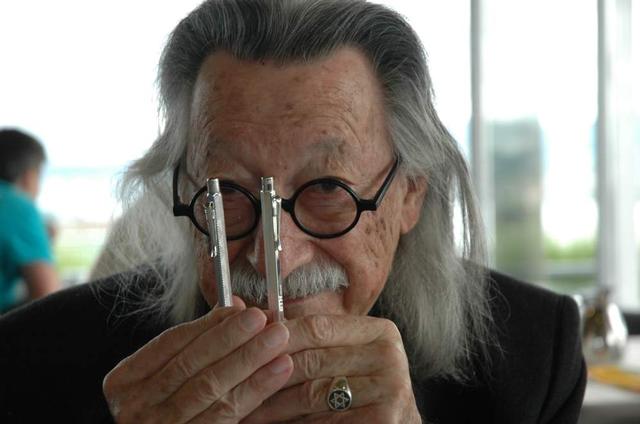
https://www.youtube.com/watch?v=5_LCLjqCTXs
Festival History
- 2013 - Singapore
- 2011 - Victoria, BC, Canada
- 2010 - Xi’an, China
- 2008 - Shanghai, China
- 2007 - Zurich, Switzerland
- 2006 - Zurich, Switzerland
- 2005 - Zurich, Switzerland